About these field measurements
Field measurements: late September 2026. Model names and cost estimates identify the tested configurations, not current prices or a universal default. The cost span changes both model and effort.
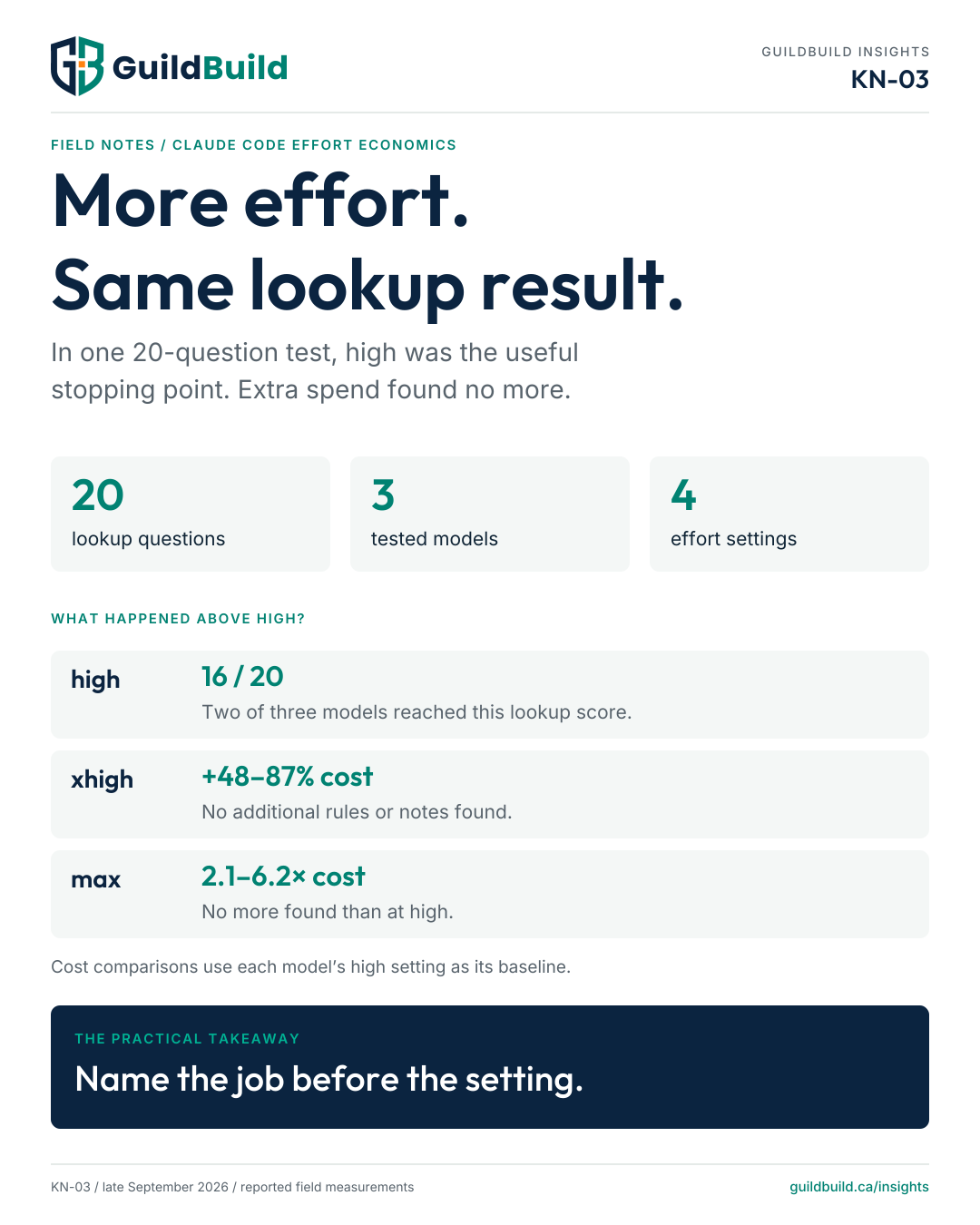

Claude Code lets you set how hard the model thinks. We tested four effort levels: medium, high, xhigh, max. Most people pick one and never look again. We ran one fixed job at those four levels on three models and read what each step bought.
On that job, the estimated cost spanned about 20 times across the model-and-effort combinations. For looking things up, everything past high found no additional rules or notes in this test.
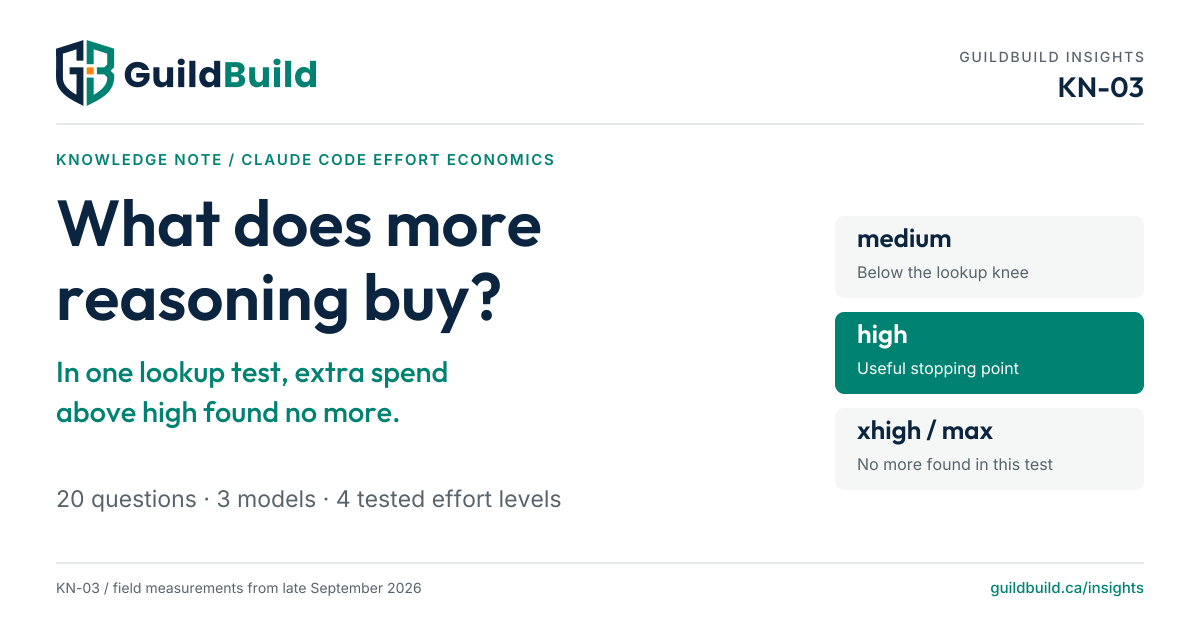
Field measurements: late September 2026. Model names and cost estimates identify the tested configurations, not current prices or a universal default. The cost span changes both model and effort.
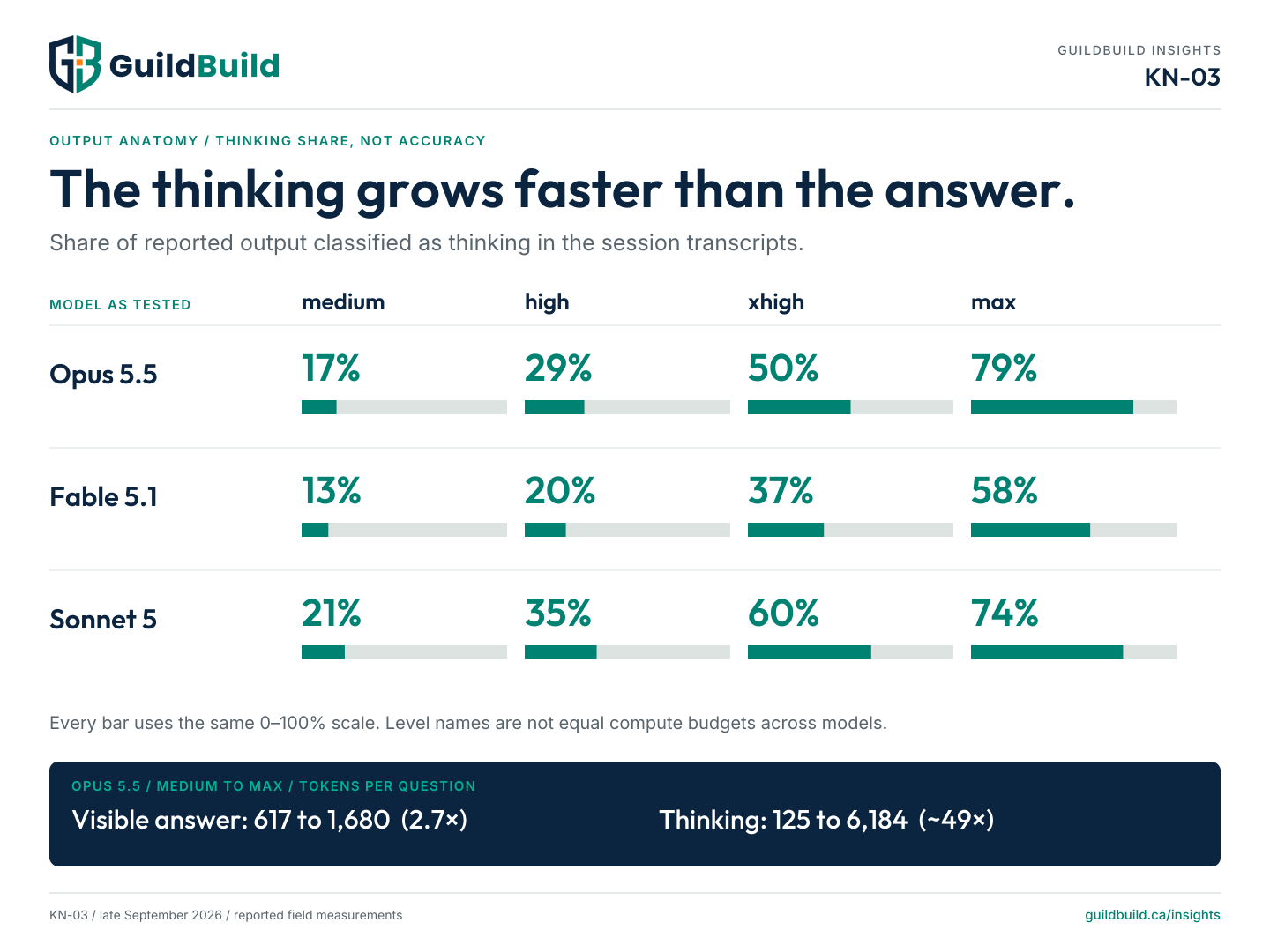
The job was a 20-question lookup test. We counted how much of each model's output was thinking.
| Share of output that is thinking | medium | high | xhigh | max |
|---|---|---|---|---|
| Opus 5.5 | 17% | 29% | 50% | 79% |
| Fable 5.1 | 13% | 20% | 37% | 58% |
| Sonnet 5 | 21% | 35% | 60% | 74% |
In these runs, effort moved the share in steps, in every model, and never out of order.
Measured as thinking tokens per visible token, each step multiplied the ratio by 1.4 to 3.7, most often 2 to 3. It is closer to a log scale than a straight line.
The visible answer grows too, but far less. On Opus, the visible part went from 617 tokens a question at medium to 1,680 at max, 2.7 times. The thinking went from 125 to 6,184, 49 times.
The harness’s list-price field estimated $0.44 for the same 20 questions on Sonnet 5 at medium and $8.54 on Opus 5.5 at max. These are the test’s recorded estimates, not actual subscription charges.
For scale, we also grew an agent's instruction file to the size of a team leader's. That added about 8,000 tokens to a 27,000-token start. In that setup, tuning the file was the smaller lever. Model and effort were the bigger ones.
The test scores whether the agent found the right rule or note.
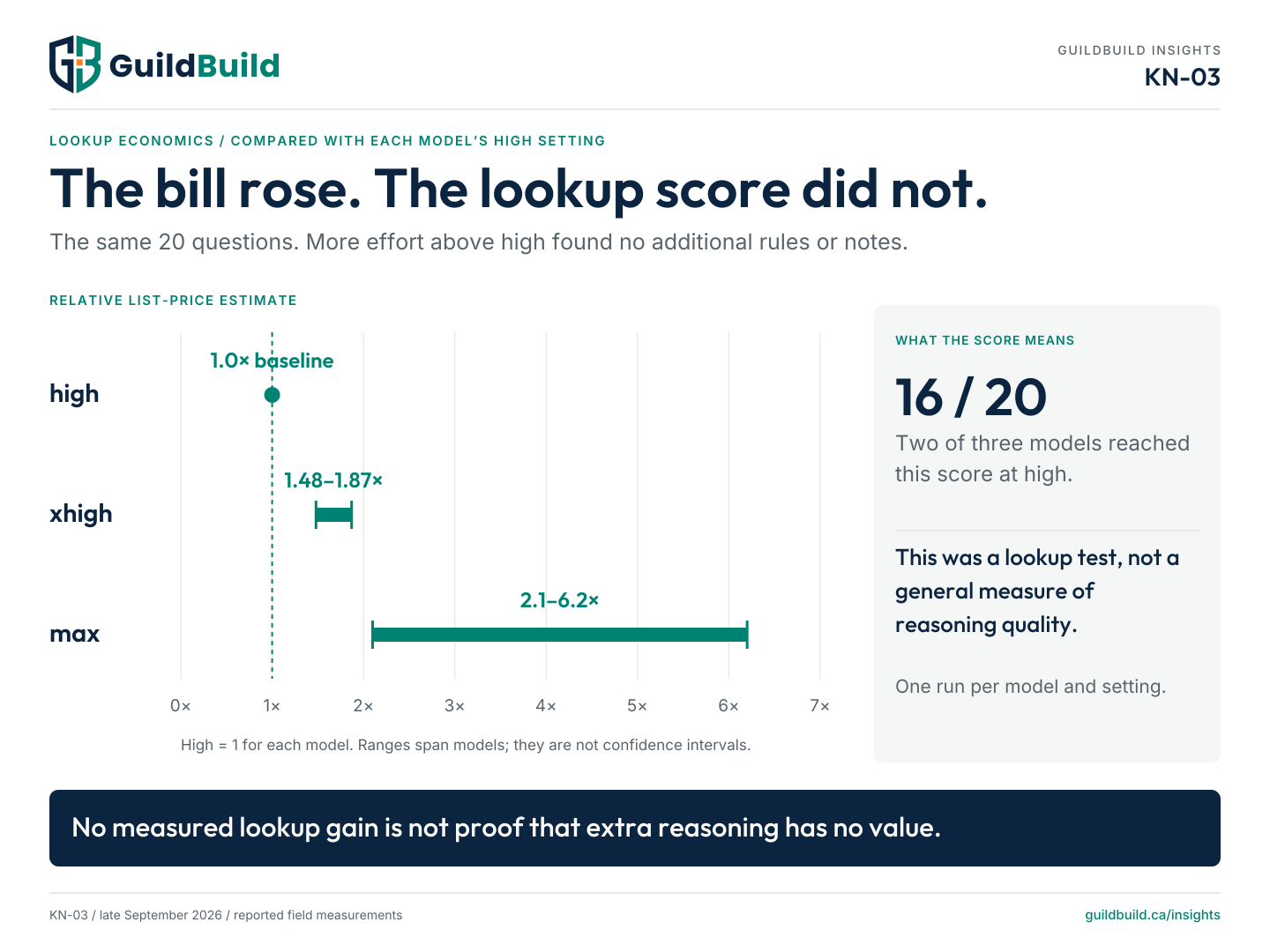
It does not say high is enough for hard thinking. This test measures finding, not judging.
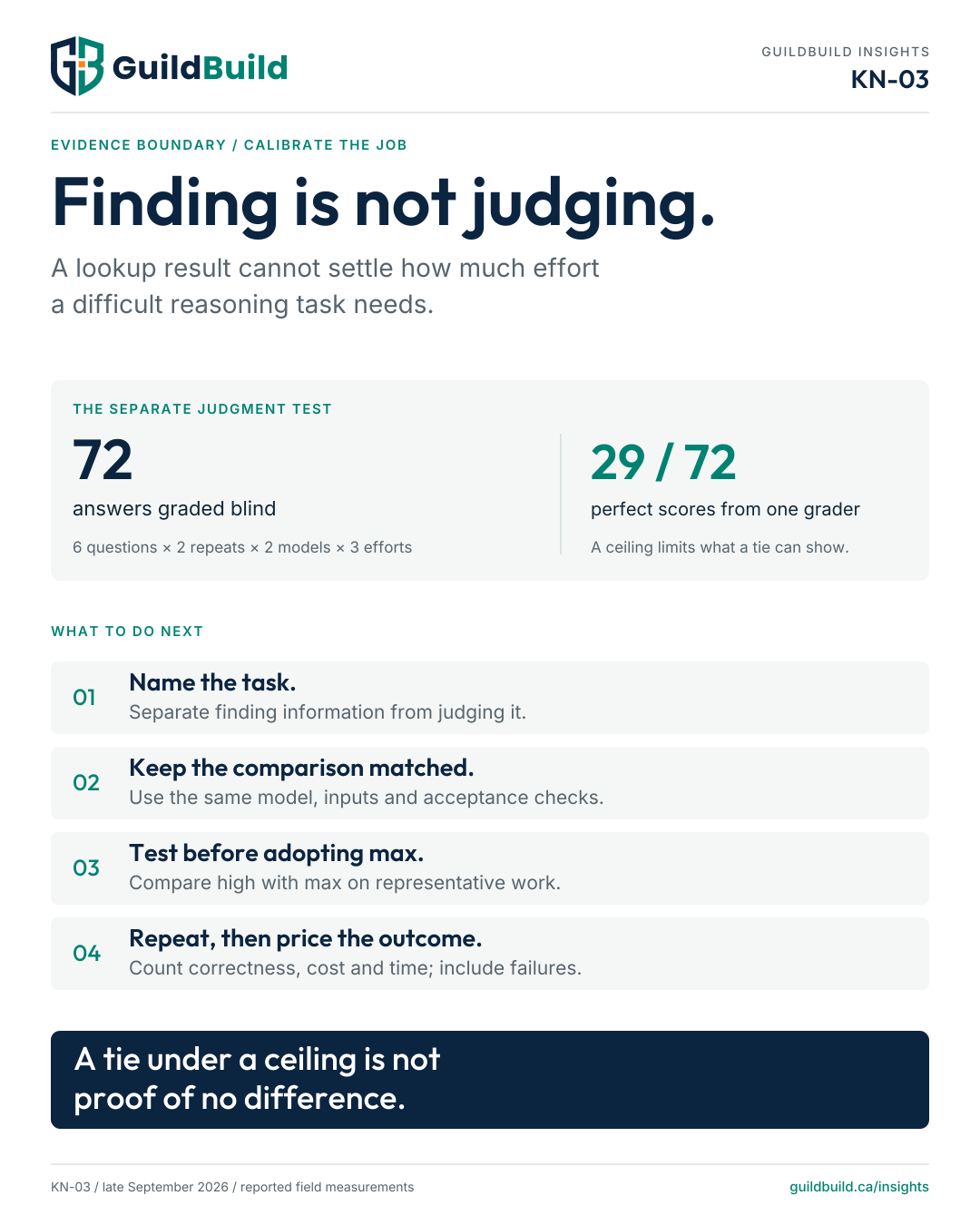
We ran one small judgment test: six questions, twice each, two models at three efforts, 72 answers graded blind by two graders. Every comparison tied. But the test had a ceiling: one grader gave 29 of the 72 a perfect score. A tie under a ceiling is not proof of no difference.
Quality by effort is Anthropic's own study, on a far larger sample (their engineering blog). Read that for broader quality evidence. Read this for cost and lookup. The current Claude Code effort documentation also notes that effort is calibrated per model and should be tested against the work; a setting name is not a model-independent compute budget.
One more thing we believe and did not measure: the kind of job moves spend as much as the setting does. That is field experience.
For the wider cost picture, see where the tokens go in a real agent team. For instruction reliability, see real guards versus prose. For the surrounding delivery process, see AI software factory traps and failures.